
Sudtrix Services
Reliable Groundworks and Excavation Experts
Groundworks and excavation support from Sudtrix Group covers site preparation, trenching, drainage routes, foundations, bases and exterior levels across Essex, London and the South East, with access, plant, spoil removal and health and safety reviewed before work begins.
Reliable Groundworks and Excavation Planning for Safer Property Work
Groundworks and excavation enquiries are reviewed around access, levels, drainage routes, plant movement, spoil removal, underground services, health and safety and the work that follows afterwards.
Groundworks and excavation are the parts of the project that everything else relies on. A driveway, extension, patio, drainage alteration, concrete base or foundation route can only perform properly when the levels, access, spoil removal and preparation are understood before work starts.
Sudtrix Group can review suitable groundworks and excavation enquiries where the ground, access, plant or hand-digging needs, nearby services, drainage, working space, health and safety responsibilities and next trade requirements are clearly explained.
A strong groundworks and excavation result depends on what the prepared area is expected to support, how water will move around it, whether the surrounding ground is stable and how safely materials, plant and people can move across the site during the work.
For homeowners, landlords, developers and commercial clients, groundworks and excavation work should feel controlled from the first conversation. Sudtrix Group looks at the practical route, the safety implications, the connected trades and the finish needed so the prepared area supports the wider project instead of creating problems for it.
For homeowners, the priority is usually a clean result with minimal confusion. For landlords and commercial clients, the priority may include durability, speed, tenant disruption, compliance and a clear sequence of trades.
- Site preparation
- Excavation
- Levels and access
- Drainage routes
- Bases and enabling works
Groundworks and Excavation Planned Around Real Site Conditions
The right groundworks and excavation route is shaped by the property, access, levels, underground services, spoil movement and the work that follows afterwards.
Groundworks and excavation starts with access, levels, service routes, spoil removal and the finished use the site needs to support.
Groundworks and Excavation Process
A groundworks and excavation job needs a controlled sequence because the earliest decisions affect drainage, levels, foundations, access, finishes and safety.
Initial Site Review
The first groundworks and excavation question is what the prepared area is expected to support. Sudtrix Group reviews the address, access, existing levels, photos, drawings, drainage points, boundaries and the reason the work is needed.
Service and Obstruction Checks
Before groundworks and excavation are planned, the job needs sensible checks for underground services, inspection covers, drainage runs, old foundations, tree roots, retaining features, neighbouring structures and anything else that could affect the dig.
Access, Plant and Spoil Planning
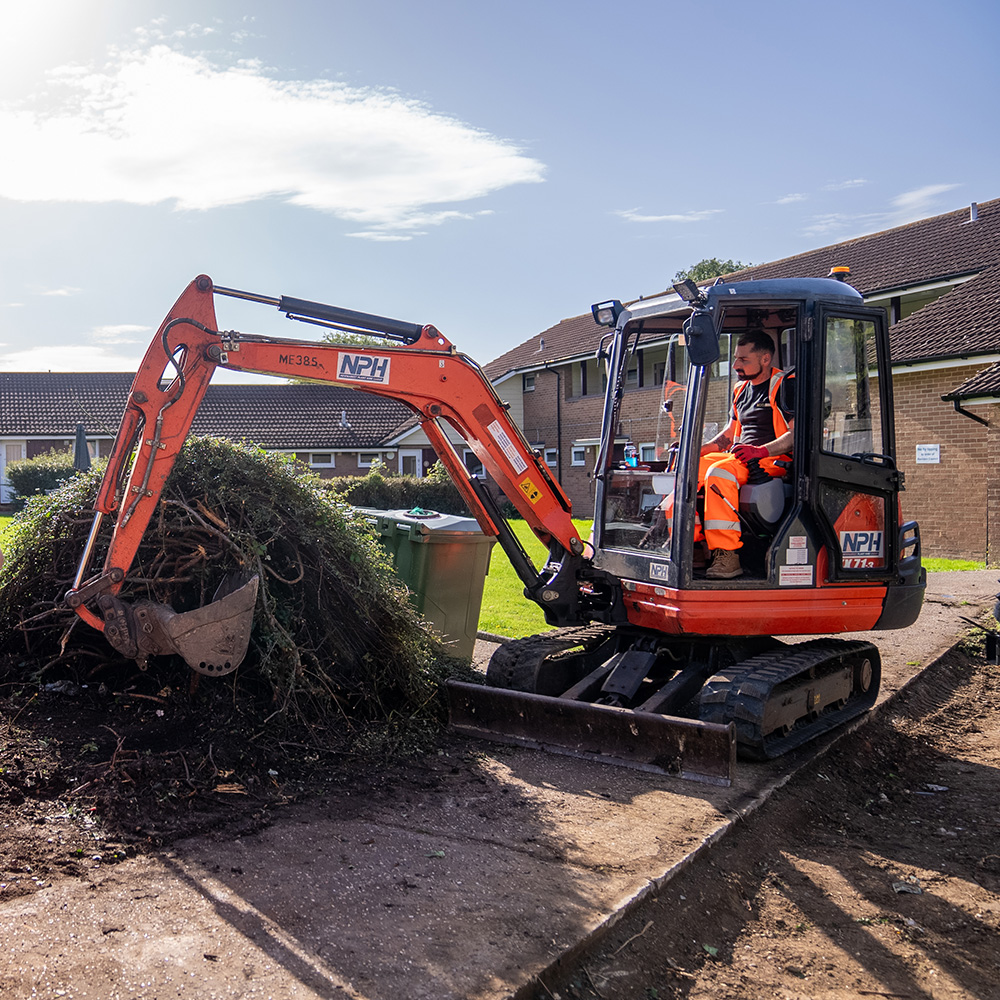
Groundworks and excavation often depends on whether machinery can reach the work area safely. Sudtrix Group considers gates, driveways, side access, parking, skips, grab lorries, material deliveries, pedestrian routes and how excavated spoil will leave the property.
Setting Out and Levels
Accurate setting out matters before digging starts. Levels, falls, finished heights, damp proof course positions, driveway thresholds, drainage falls and finished surfaces all need to be considered so the excavation supports the finished job.
Excavation and Formation
The groundworks and excavation stage can include reducing levels, trenching, preparing bases, digging for foundations, opening drainage routes, removing unsuitable material and forming a stable base for concrete, hardcore, drainage, paving or later construction.
Backfill, Compaction and Making Good
The final groundworks and excavation check is whether the area needs suitable backfill, compacted layers, protection around services, reinstatement, surface preparation, waste removal and a clean finish ready for the next trade or final use.
Specific Groundworks and Excavation Jobs Sudtrix Group Can Review
Groundworks and excavation can sit underneath many other property improvements. The detail depends on what the finished project needs to support.
For an extension, groundworks and excavation may include site clearance, digging foundation trenches, preparing concrete pours, coordinating drainage routes and leaving the build area ready for brickwork or structural stages. For a driveway or patio, the focus may be reduced levels, sub-base preparation, falls, drainage, edging and a surface that can deal with regular use.
For garden or exterior changes, the work may involve levelling, retaining edges, moving soil, preparing bases for sheds or outbuildings, forming steps, improving access routes and making sure water does not get pushed towards the house or neighbouring property. For repairs, the work may be more targeted, such as exposing a drain run, preparing a concrete pad or making safe a failed surface.
Sudtrix Group treats these as practical site jobs rather than generic digging. The important questions are what the excavation is for, what it affects, how materials will move through the property, whether services are present and what condition the area must be left in for the next stage.
Reliable Groundworks and Excavation Decisions That Protect the Project
Groundworks and excavation should be planned as the preparation system for the finished project, not as isolated digging that happens before the visible work starts.
Reliable groundworks and excavation begins by understanding the structure, surface, drainage route or external feature that will rely on the prepared ground. A house extension, garden room, retaining detail, patio base, driveway, drainage alteration or concrete slab will all place different demands on the ground. Sudtrix Group looks at the finished use first because that decides whether the job needs simple clearance, deeper excavation, service checks, spoil removal, sub-base preparation, compaction or a more careful sequence before the next trade arrives.
For many clients, groundworks and excavation is the point where a project becomes serious. Soil is removed, levels change, machinery may arrive, waste has to leave site and the next stage becomes dependent on the accuracy of the preparation. That is why Sudtrix Group asks for photos, measurements, drawings, access information, drainage details and any known restrictions before giving advice. It is better to identify narrow access, underground services, uneven ground, soft spots, tree roots or boundary risks early than to discover them after the work has started.
Good groundworks and excavation planning protects the trades that follow. Foundations need the right trench position and depth. Concrete bases need suitable formation, edge details and compaction. Driveways and patios need falls, drainage and a strong sub-base. Garden work may need retaining edges, level changes and safe movement of materials. Repairs may need careful exposure of drainage or failed surfaces without damaging the surrounding property. The prepared ground may be hidden later, but it still influences the quality and durability of the finished result.
Health and safety is part of the groundworks and excavation conversation from the first enquiry. Open excavations can create edge risks, collapse risk, slips, trips and manual handling concerns. Plant movement can affect pedestrians, parked cars, driveways, lawns, fences and neighbouring property. Underground services need caution because electric, gas, water, drainage and data routes can be present even where they are not obvious. Sudtrix Group plans around these practical details because a safer, tidier route usually creates a better working day and a more predictable outcome.
Groundworks and excavation can also sit close to regulated parts of a project. Building regulations, structural calculations, drainage requirements, party wall considerations, highway access, waste disposal and competent trade requirements may all become relevant depending on the property and the scope. Sudtrix Group does not treat every small clearance job as a formal construction project, but it does help clients think through whether drawings, approvals, inspections or specialist input may be needed before work moves forward.
The condition of the ground can change the groundworks and excavation plan. Made-up ground, old rubble, buried concrete, clay, tree roots, previous building work, waterlogged soil, drainage failures and unsuitable material can all affect the route. Sometimes the correct answer is more preparation. Sometimes it is revised levels, staged excavation, extra drainage thinking or advice from a professional already involved in the project. The aim is to keep the work realistic instead of promising a simple dig where the site needs more thought.
Sudtrix Group also looks at the practical finish. A reduced-level area may need to be left ready for hardcore, concrete, paving, foundations, landscaping, drainage or another trade. A trench may need to be clean for inspection or follow-on work. A prepared base may need falls, edges, compacted layers or service routes. Groundworks and excavation is stronger when the end point is clearly understood before the first material is moved.
How Groundworks and Excavation Pricing Is Shaped
A useful quote depends on scope, access, depth, spoil volume, plant movement, safety controls, waste removal and the quality of the information supplied at enquiry stage.
Groundworks and excavation pricing is rarely based on area alone. Two jobs of the same size can have very different requirements if one has easy access and level ground while the other needs hand digging, spoil removal through a narrow route, protection around existing walls, staged deliveries, underground service checks or careful reinstatement. Sudtrix Group therefore looks at the route to the work area, not just the finished dimensions.
Depth and ground condition are major variables. A shallow dig for a small base may be straightforward, but extension foundations, drainage routes, retaining details or driveway preparation may need deeper excavation and more control. The deeper the work, the more important it becomes to consider collapse risk, nearby loads, service routes, spoil storage, weather and the stability of the surrounding ground. Groundworks and excavation becomes more predictable when these issues are discussed early.
Plant access also affects price and programme. If a mini digger, dumper, skip or grab lorry can reach the work area easily, the route may be simpler. If the work needs hand digging, wheelbarrow movement, smaller machinery, temporary protection or staged spoil removal, the labour and timing change. Groundworks and excavation is easier to plan when movement of soil, hardcore, concrete, drainage materials, tools and waste is treated as part of the job from the start.
Waste removal can be another hidden factor. Excavated soil, old paving, broken concrete, rubble, tree roots and unsuitable ground have to leave site legally and safely. Access for skips, grab lorries or smaller removal routes can change the labour needed. Where the property is occupied, Sudtrix Group also considers keeping access usable, protecting existing surfaces and reducing unnecessary disruption while groundworks and excavation work is underway.
Programme matters because preparation controls everything that follows. Clearance, excavation, service checks, drainage preparation, sub-base, compaction, inspection points, concrete, paving or construction stages need to be sequenced properly. Some work can move quickly, but other groundworks and excavation jobs need space between stages so the site can be checked, protected or handed over correctly. Rushing the programme can cause more problems than it solves.
Clients get a clearer route when they share the useful details first. Photos from several angles, drawings, measurements, ground condition notes, access photos, inspection cover positions and an explanation of the finished project all help. Sudtrix Group can then review whether the groundworks and excavation enquiry looks like a simple service job, a staged project or work that needs more formal drawings, approvals or inspections before pricing is sensible.
Health & Safety for Groundworks and Excavation
Groundworks and excavation safety is about planning the job before the first bucket of soil is removed. The main risks are usually below ground, beside the excavation or moving around the site.
Groundworks and Excavation Emergency Call Out Planning
Some urgent property issues need temporary protection or investigation before a full groundworks and excavation plan can be agreed.

Urgent leaks, collapsed surfaces, storm damage, exposed drains or unsafe access can sometimes lead into a groundworks and excavation enquiry once the immediate risk is understood.
A 24/7 emergency call out is not always a full groundworks and excavation job on day one. The first response may be about understanding risk, access, isolation, temporary protection, drainage condition, surface stability and whether the property can be made safe before a larger repair is planned.
Where the issue involves failed paving, water movement, damaged drainage, unsafe edges, sinking ground or storm-related damage, Sudtrix Group can connect the urgent enquiry with the right follow-on service. That may include repairs and maintenance, plumbing, roofing, drainage-related preparation, concrete work, making good or a more detailed groundworks and excavation quote.
Emergency work still needs health and safety discipline. Access, lighting, weather, live services, trip risks, wet surfaces, unstable materials and the condition of nearby structures are considered before practical next steps are discussed.
What To Send Before a Groundworks Quote
The clearer the early information, the easier it is to understand the job, the plant needed, the safety considerations and the likely sequence.
- Photos of the work area, access route, boundaries, nearby walls and the nearest road or driveway.
- The purpose of the groundworks, such as extension foundations, drainage, driveway preparation, patio base, concrete slab or repairs.
- Any drawings, measurements, proposed levels, drainage plans or structural details already available.
- Known service information, including drains, inspection covers, gas, electric, water, telecoms, outbuildings and previous building work.
- Access details for machinery, skips, deliveries, spoil removal, parking, neighbours and whether the property will be occupied.
- Timescale, budget expectations and whether another trade is waiting for the groundworks to be completed.
Groundworks and Excavation Compliance Resources
These official resources are useful when a groundworks and excavation project may involve structural work, drainage, services, controlled building work or construction site safety.
HSE Excavation Safety
HSE guidance explains key excavation risks including collapse, falling material, services, water ingress, nearby structures and inspection.
External resourceHSE Construction Guidance
HSE construction guidance is useful for site safety, duty holder responsibilities, planning and practical risk control.
External resourceGOV.UK Building Regulations
GOV.UK explains when building regulations approval may be needed for construction, extensions and alterations.
External resourceApproved Documents
Approved Documents include guidance relevant to structure, site preparation, drainage and other controlled building work.
External resourceRelated Building & Property Services
Many projects need more than one trade, so these related services are linked for easy movement through the site.
Reliable Groundworks and Excavation Experts Across Local Areas
Sudtrix Group covers a focused South East service area. Choose a county page for local detail.
Helpful Property Guidance
Some building and property work may involve planning, building regulations, party wall matters, competent person requirements or health and safety considerations.
Planning permission
GOV.UK planning guidance can help property owners understand when formal permission may be needed.
External resourceBuilding regulations
GOV.UK building regulations guidance explains approval routes for controlled building work.
External resourceApproved Documents
Approved Documents give technical guidance on ways to satisfy building regulations in England.
External resourceParty wall guidance
Party wall guidance is useful when work affects shared walls, boundaries or nearby structures.
External resourceConstruction safety
HSE construction guidance explains safety duties and practical site risk considerations.
External resourceCompetent person schemes
Competent person schemes can apply to certain regulated electrical, heating, plumbing or glazing works.
External resourceReliable Groundworks and Excavation Experts FAQs
Common questions before contacting Sudtrix Group about this page.
What is included in groundworks and excavation?
Groundworks and excavation can include site clearance, reduced levels, trenching, foundations, drainage routes, sub-base preparation, concrete bases, spoil removal, backfill and making good.
How is a groundworks job planned?
The job is planned around the purpose of the excavation, access, plant, spoil removal, services, levels, drainage, neighbouring structures, safety controls and what the next trade needs.
What are the main excavation safety risks?
Common risks include ground collapse, underground services, falls into excavations, plant movement, water ingress, undermining nearby structures, unstable edges and poor access.
Do underground services need checking before excavation?
Yes. Known service routes, drawings, inspection covers and site checks should be considered before excavation starts, especially where gas, electric, water, drainage or data services may be present.
Can Sudtrix Group prepare foundations?
Yes. Sudtrix Group can review foundation preparation enquiries where drawings, dimensions, access and building-control requirements are clear.
Can groundworks be linked to drainage?
Yes. Drainage routes, falls, inspection chambers and surface-water management can be part of a groundworks enquiry where suitable.
Can you remove spoil from site?
Spoil removal can be considered as part of the job planning, depending on access, volume, disposal route, skips, grab lorries and local restrictions.
What should I send for a groundworks quote?
Send photos, drawings if available, measurements, the purpose of the excavation, service information, access details, parking notes and your preferred timescale.
Speak to Sudtrix Group
Send your property location, the work needed, photos if available and your ideal timescale. Sudtrix Group can review the enquiry and explain the next practical step.